
 english





Introduction
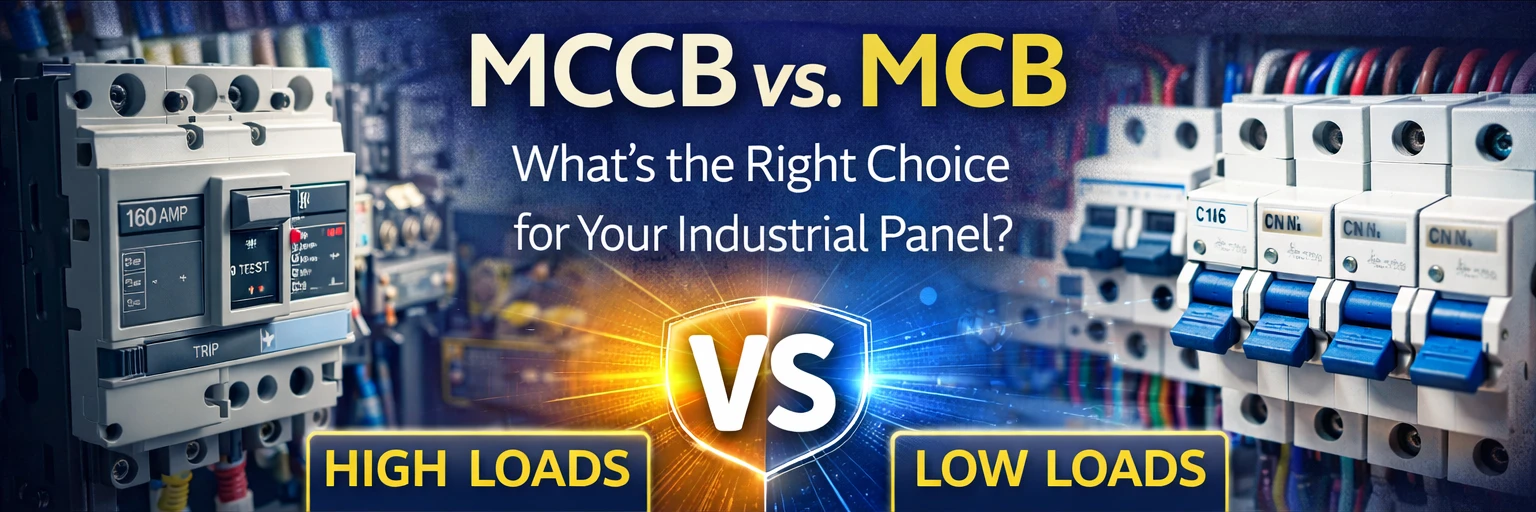
In any industrial facility, choosing the correct circuit protection device is critical. One of the most common questions engineers face is: Should I use an MCB or an MCCB? While both offer protection, the differences in their design, capacity, and application can greatly impact your system’s safety and efficiency.
What is an MCB?
A Miniature Circuit Breaker (MCB) is designed for low-power, low-voltage circuits—typically found in residential or light commercial systems. MCBs are compact, easy to use, and provide protection against overloads and short circuits up to around 100A with a breaking capacity of typically 6kA–10kA.
What is an MCCB?
Molded Case Circuit Breakers (MCCBs) are built for higher-capacity industrial systems. With current ratings ranging from 100A to 1600A+, and breaking capacities exceeding 25kA or even 65kA, MCCBs are the go-to solution for submain or main distribution panels in factories, processing plants, and large infrastructure.
Key Differences Between MCB and MCCB:
| Feature | MCB | MCCB |
| Current rating | Up to 100A | 100A to 1600A+ |
| Breaking Capacity (Icu) | 6kA–10kA | 16kA–65kA+ |
| Application | Light duty (homes/offices) | Industrial/heavy duty |
| Trip Characteristics | Fixed thermal-magnetic | Adjustable thermal-magnetic |
| Cost | Lower | Higher |
When to Use MCCBs over MCBs
Large motors or generators are involved
Short-circuit potential is higher (>10kA)
Adjustable trip settings are required
Remote shunt/under-voltage trip accessories are needed
The installation requires energy monitoring or advanced protection coordination
Browse MCCBs and MCBs on HUB
HUB offers a wide selection of circuit breakers from top brands like Siemens, ABB, and Mitsubishi, with real-time availability, technical datasheets, and support for replacement parts and accessories.